Source stage lighting cable for stage effects, speakers, and monitors
Compare 30 verified listings for stage lighting cable suitable for stage effects, speakers, and monitors. Buyers can review specifications like cable length, material, and certifications including RoHS and CE to find the right supplier.
Key considerations
Products List




Comprehensive Sourcing Guide
Strategic Sourcing Guide for Stage Lighting Cable Procurement
Procuring stage lighting cable requires a nuanced understanding of the intersection between electrical safety, signal integrity, and the demanding physical environment of live events. The global market for stage equipment cable is characterized by a high volume of manufacturers primarily located in China, with specific regional hubs like Guangdong and Jiaxing emerging as significant production centers. For procurement professionals, the challenge lies in navigating a fragmented supply chain where product attributes vary significantly between single-item listings and bulk industrial orders. This guide provides a structured approach to sourcing stage lighting cable, focusing on verified technical specifications, compliance frameworks, and supply chain logistics derived from current market data.
Technical Specifications and Material Composition
The foundation of a successful procurement strategy for stage lighting cable begins with a rigorous analysis of material composition and physical specifications. In the current market, stage equipment cables are not monolithic; they exist in various forms tailored to specific applications, ranging from power distribution to signal transmission. Buyers must distinguish between cables designed for high-current power delivery and those intended for low-voltage audio or control signals.
A critical observation in the current product landscape is the diversity in conductor materials. While some listings specify "Bare Copper Wire" as the wire core material, which is standard for high-conductivity applications, others may reference different internal structures. The conductor type is equally vital; specifications often indicate "Solid" conductors, which are generally preferred for permanent installations due to their structural stability, whereas stranded conductors (often implied in flexible cable types) are essential for the frequent movement required in stage environments. The market data indicates a clear preference for "Round Wire" shapes in general applications, though "Flat Wire" options are also available, likely serving specific space-constrained routing needs.
Insulation and jacketing materials further define the cable's performance. Attributes such as "ABS" and "plywood" appear in product descriptions, though these are often associated with the packaging or specific component housings rather than the cable jacket itself. For the cable jacket, buyers should verify the material's resistance to abrasion, heat, and chemicals. The "Protection Grade" of IP33 is a specific data point observed in the market, indicating a level of protection against solid objects larger than 2.5mm and water spray, which is relevant for stage environments where dust and incidental moisture are concerns. However, for heavy-duty stage lighting, higher IP ratings are often standard, so this specific observation should be treated as a baseline for certain product lines rather than a universal requirement.
Cable length is another variable that demands attention. While standard lengths like 1 meter are listed for single items, the market also supports extensive customization. Specifications such as "2-5m" with the note that "Free Length Can Be Customized" highlight the flexibility available to buyers. This customization capability is crucial for stage setups where cable runs vary drastically between venues. The standard cross-sectional areas observed include 2X0.75MM2, 2X1.0MM, 2X1.5MM2, 2X2.0MM2, and 2X2.5MM2. These figures represent the conductor capacity and must be matched precisely to the wattage of the lighting fixtures to prevent voltage drop and overheating.
Compliance and Certification Verification
In the B2B procurement of electrical components, compliance is not merely a formality but a prerequisite for market access and liability protection. The stage lighting industry operates under strict safety regulations, particularly in the European Union (EU) and North America. The supplied data confirms that a significant portion of the market offers products with "RoHS" and "CE" certifications. RoHS (Restriction of Hazardous Substances) ensures that the cable manufacturing process adheres to environmental standards regarding lead, mercury, and other toxic materials. CE marking indicates conformity with health, safety, and environmental protection standards for products sold within the European Economic Area.
However, buyers must exercise caution when interpreting certification claims. The data includes variations such as "ISOColor:Black" and "ISOColor:Grey" appended to certification fields, which suggests that some listings may conflate color codes with certification standards. A legitimate ISO certification (such as ISO 9001 for quality management) is distinct from product-specific safety marks. Buyers should request valid, independent certification documents rather than relying solely on the text provided in product listings. The presence of "ISO" in a certification field alongside color descriptors requires immediate verification to ensure the product meets the actual ISO standard rather than a mislabeled attribute.
Furthermore, while "UL 1573" is mentioned in background knowledge as a relevant standard, it is not explicitly confirmed in the high-confidence product facts. UL (Underwriters Laboratories) standards are critical for the North American market. If the target market includes the US, buyers must explicitly verify UL compliance, as CE and RoHS do not substitute for UL requirements in this region. The absence of explicit UL data in the primary product facts means that assuming compliance without direct supplier confirmation is a high-risk strategy.
Cost Drivers and Pricing Dynamics
Understanding the cost structure of stage lighting cable is essential for budgeting and negotiating effective terms. The observed price range in the market spans from 0 to 500 USD, a wide variance that reflects differences in cable length, material quality, and order volume. This range is not indicative of a single product's price but rather the spectrum of available options, from short, single-unit cables to bulk spools of heavy-duty wire.
The primary cost driver in this sector is the volume of copper used, which fluctuates with global commodity markets. Cables with larger cross-sectional areas, such as 2X2.5MM2, will inherently cost more than those with 2X0.75MM2 due to the higher material content. Additionally, the "Customization" attribute being available suggests that non-standard lengths, specific jacket colors, or unique connector types will incur a premium. Buyers should anticipate that standardizing their requirements can significantly reduce unit costs.
Minimum Order Quantity (MOQ) is another critical factor influencing the final cost. The market data reveals an MOQ range of 1 to 10,000 units, with a specific high-confidence fact noting an MOQ of 3000m for certain cable types. This indicates a bifurcated market: one segment catering to small-scale events or repair needs with low MOQs, and another serving large-scale production or rental companies with bulk requirements. The "Selling Units" are often listed as "Single item," which can be misleading if the buyer intends to purchase in bulk. Procurement strategies must align the order size with the supplier's MOQ to avoid per-unit price inflation or the inability to fulfill the order.
Typical Applications and Connector Compatibility
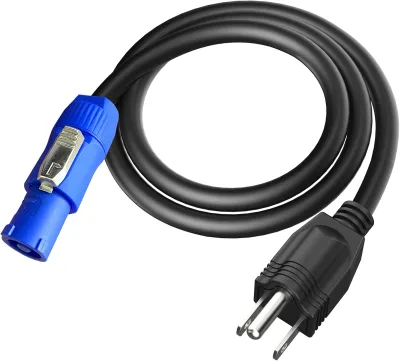
Stage lighting cable serves diverse functions, and selecting the wrong type can lead to signal loss or equipment failure. The product data highlights several distinct application categories. "Stage light" and "stage effect machine" applications typically require robust power cables capable of handling high loads. These cables often feature connectors like the "power cable with plug" or specific industrial connectors not detailed in the generic list but implied by the application context.
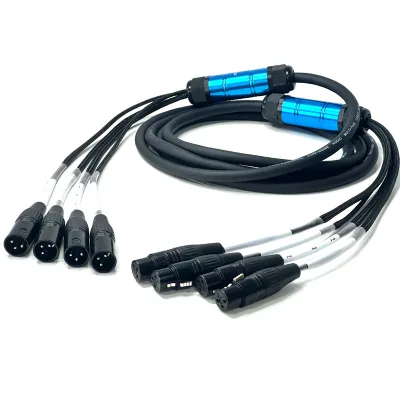
For signal transmission, the market offers cables designed for "Microphone," "Multimedia," "Monitor," "Computer," "Speaker," "DVD Player," and "Game Player" applications. These are often identified as "Twisted Pair" or "AV" (Audio/Video) cables. The connector types vary significantly; "RCA" connectors are common for consumer-grade audio and video, while "XLR" connectors are the industry standard for professional stage audio and DMX control signals. The presence of "RCA" and "XLR" in the attribute list confirms that the market supports both consumer and professional-grade interfaces.
Buyers must ensure that the cable type matches the specific equipment. For instance, a "speaker cable" with a "prod_model" of "speaker cable" is distinct from a general "cable" or "power cable." Using a signal cable for power delivery or vice versa can result in catastrophic equipment damage. The "Type" attribute, such as "Insulated" or "Twisted Pair," further guides the selection. Twisted pair cables are essential for reducing electromagnetic interference (EMI), which is prevalent in stage environments with high-power lighting rigs.
Supplier Evaluation and Origin Analysis
Evaluating suppliers for stage lighting cable requires a focus on origin, production capacity, and reliability. The data consistently points to "China" as the place of origin, with specific mentions of "Guangdong, China" and "Jiaxing." Guangdong is a major manufacturing hub for electronics and electrical components, suggesting a mature supply chain with access to raw materials and skilled labor. Jiaxing, located in the Yangtze River Delta, is also a significant industrial center.
When evaluating suppliers, buyers should verify the "brand name" and "OEM" (Original Equipment Manufacturer) capabilities. The brand "Topflashstar" is listed, indicating that some suppliers offer branded products, while the "OEM: Welcome" attribute suggests that many manufacturers are open to private labeling. This is a valuable feature for rental companies or event production firms looking to brand their equipment. However, the presence of a brand name does not guarantee quality; it is essential to cross-reference the brand with independent reviews or past performance data.
The "Delivery Date" of "Within 30 Days" is a standard lead time observed in the market. For large-scale projects, this timeline must be integrated into the overall production schedule. Buyers should also consider the "prod_packing" methods, which range from "Carton Packing" to "Soft Coil, Plastic Spool, Paper Spool" and "Pallet" shipping. Proper packaging is crucial for preventing cable damage during transit, especially for long rolls of wire. The "Single package size" of 23X23X23 cm and the "Weight" of 0.5kgs to 1.000 kg provide logistical data for freight planning.
Quality Control and Long-Term Procurement Considerations
Ensuring consistent quality in stage lighting cable procurement involves implementing robust quality control (QC) measures. The "warranty" period observed in the market ranges from 3 months to 1 year. This warranty period serves as a baseline for the manufacturer's confidence in their product. However, a warranty is only as good as the supplier's ability to honor it. Buyers should prioritize suppliers who offer clear warranty terms and responsive after-sales support.
Long-term procurement considerations include the durability of the cable under repeated use. Stage equipment is subject to constant movement, coiling, and uncoiling, which can lead to fatigue and breakage. The "Material Shape" and "Conductor Type" are key indicators of durability. Solid conductors may be less flexible but more resistant to breakage in fixed installations, while stranded conductors (often implied in flexible cables) are better for dynamic environments. The "Protection Grade" of IP33 offers a starting point for environmental resistance, but buyers should verify if higher ratings are available for outdoor or high-moisture applications.
To mitigate risks, buyers should consider a phased procurement strategy. Start with small test orders to verify the physical quality, certification documents, and delivery performance. Once the supplier's reliability is established, scale up to larger orders to leverage volume discounts. Regular audits of the supplier's production processes and quality control protocols can further ensure consistency. Finally, maintaining a diverse supplier base can protect against supply chain disruptions, ensuring that critical stage equipment is always available when needed.
Comparative Analysis of Cable Attributes
To facilitate decision-making, the following table summarizes key attributes observed in the current market for stage lighting cable procurement. This comparison highlights the variability in specifications and helps buyers identify the most suitable options for their specific needs.
| Attribute | Observation 1 | Observation 2 | Observation 3 | Procurement Note |
|---|---|---|---|---|
| Material Shape | Round Wire | Flat Wire | N/A | Select Round for general use; Flat for constrained spaces. |
| Conductor Type | Solid | N/A | N/A | Solid for fixed installs; verify stranded for flexibility needs. |
| Wire Core | Bare Copper Wire | N/A | N/A | Copper is standard; verify purity for conductivity. |
| Certification | RoHS, CE | RoHS, CE, ISO | CE, RoHS | Verify ISO validity; ensure CE matches target market. |
| Connector | XLR, RCA | Power Plug | N/A | Match connector to equipment (XLR for pro audio, RCA for consumer). |
| Application | Stage Light, Mic | Multimedia, Speaker | Power Cable | Ensure cable type matches the specific signal or power load. |
| MOQ | 3000m | 1 Unit | 10000 Units | Align order size with MOQ to optimize cost. |
| Origin | Guangdong, China | Jiaxing, China | China | Guangdong offers mature electronics supply chain. |
| Warranty | 3 months ~ 1 year | N/A | N/A | Higher warranty periods may indicate better quality confidence. |
| Packing | Carton, Pallet | Soft Coil, Spool | N/A | Ensure packing prevents kinking and physical damage. |
This table serves as a reference point for buyers to compare product listings against their technical requirements. By systematically evaluating these attributes, procurement professionals can make informed decisions that balance cost, quality, and performance. The diversity of options in the market allows for tailored solutions, but it also demands a disciplined approach to verification and selection. Ultimately, the success of stage lighting cable procurement relies on a clear understanding of these specifications and a commitment to rigorous supplier evaluation.
FAQs
What certifications do stage lighting cables typically have?
Stage lighting cables typically carry RoHS and CE certifications to ensure safety and environmental compliance. Some listings also mention ISO standards, though buyers must verify these documents carefully as color codes may be confused with certification names in product descriptions.
Can I customize the length of the stage lighting cable?
Yes, customization is available for cable lengths, with standard options ranging from 1 meter to 2-5 meters. Buyers can request free length customization to fit specific venue requirements, provided they meet the supplier's minimum order quantity of 3000 meters for bulk orders.
Which connector types are available for stage lighting applications?
Available connector types include RCA, XLR, and power cable plugs depending on the specific application. RCA connectors are common for multimedia, while XLR connectors are standard for microphones and professional stage audio equipment requiring signal transmission.
How long is the delivery time for stage lighting cables?
The delivery time for stage lighting cables is typically within 30 days from the order date. This lead time applies to orders placed with manufacturers located in China, specifically in regions like Guangdong and Jiaxing, which are major production hubs.
What materials are used for the wire core of these cables?
The wire core material is typically bare copper wire, which ensures high conductivity for power and signal transmission. The conductor type is often solid, suitable for permanent installations, while the wire shape can be either round or flat depending on the specific product model.
What is the minimum order quantity for stage lighting cables?
The minimum order quantity varies, with some suppliers requiring 3000 meters for specific cable types. Other listings may accept single items or orders as low as 1 unit, but bulk industrial orders generally adhere to higher volume thresholds to secure pricing.